

Intestinal Bacteria Modulate Inflammatory Arthritis
Review of paper published by W.K. Jubair et al. which analyzes how intestinal microbiota changes during the development Collagen-Induced Arthritis in mice. The study continues by using broad-spectrum antibiotics to observe the time-dependent effects that microbiota exert on autoimmunity. Read More
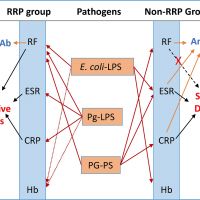
Different Bacterial Pathogens May Affect Serological Disease Markers in RRP and non-RRP Rheumatoid Arthritis
Summary of Terato et al. (2018) which studied correlations between antibody responses to common bacterial pathogens (E. coli LPS, P. gingivalis LPS, and peptioglycan-polysaccharide) and rheumatoid arthritis disease markers. The results suggest that different bacterial pathogens may be involved in evoking serological disease markers in RRP and non-RRP rheumatoid arthritis, and may contribute to the different disease outcomes in these patient groups. This paper lays the groundwork for studying rheumatoid arthritis and other autoimmune diseases as perturbations of gastrointestinal bacterial populations rather than a malfunctioning immune response. Read More
New Product: MTT Cell Proliferation and Viability Assay Kit
Since its creation in 1983 (1), the MTT assay has been widely used for assaying cell viability, proliferation, and measuring the cytotoxicity of test compounds. MTT is one of several tetrazolium salts that have been used for assessing metabolic activity of cells, however it is the only one that is positively charged and therefore can readily be taken up by... Read More
Bifidobacterium infantis reduces inflammation in mouse models of asthma and food allergies
A study conducted at Shenzhen Children's Hospital demonstrates how oral feeding of B. infantis can reduce signs of inflammation in ovalbumin-induced asthma and β-lactoglobulin-induced food allergy in mice. This study adds to a growing body of research suggesting that manipulation of gut microbiota is a viable treatment for allergies and autoimmune diseases. Read More
Influence of Diet and Probiotic Bacteria on Intestinal Barrier Function
The permeability of the intestinal epithelial barrier plays a significant role in an individual's systemic exposure to LPS and other bacterial toxins. The complex relationship between diet and intestinal permeability is not entirely clear, however the article reviewed here presents evidence that a probiotic bacteria, L. gasseri SBT2055, may be able to improve intestinal permeability. This research can lead to new strategies for treating metabolic disorders like obesity. Read More
Introduction to Exosomes: Origin, Characteristics, and Isolation
A brief overview discussing the differences between exosomes and other extracellular vesicles, therapeutic potential of exosomes, and the difficulties in purifying exosomes. Read More
Review: Therapeutic Effect of L. helveticus (SBT2171) on Collagen-Induced Arthritis
Review of Yamashita et al. (2017) that highlights the therapeutic effect of L. helveticus (SBT2171) on collagen-induced arthritis in mice. Read More
New Product Alert: CD63, CD9, PD-1, PD-L1 Monoclonal Antibodies
Nearly 35 years ago when endosomal-derived extracellular vesicles were first identified in reticulocytes1, they were thought to essentially be garbage cans for the cell; removing cellular debris and marking it for degradation by lysosomes. After this discovery, these vesicles were identified in nearly all mammalian cell types, as well as in some eukaryotes and prokaryotes. However, the function of these molecular vehicles was... Read More
New Product Alert: Mouse Anti-HDM IgE Antibody Assay Kit
A 2013 report from the Center for Disease Control and Prevention (CDC) estimates 39.5 million Americans have been diagnosed with asthma in their lifetimes, with the prevalence of asthma having increased by 28% from 2001-20111. Furthermore, a 2011 report from the National Center for Health Statistics estimated that in 2007 alone, asthma accounted for $56 billion dollars (in 2009 dollars)... Read More
The Hygiene Hypothesis, the Naive Immune System and House Dust Mites
Over the past several decades, many countries around the world have experienced rapid industrialization, leading to increased living standards and improved hygienic measures. While these all seem like positive changes for a society, researchers are finding that these trends have been accompanied by an increase in the prevalence of allergies and autoimmune diseases. Researchers propose that one possible explanation for this phenomenon... Read More
Review: Naive CD4+ T-cells in Autoimmunity & Inflammation
Autoimmunity is attributed to a dysregulation of the adaptive immune response that results in targeting of the bodys own healthy tissues by immune cells. The exact origins of autoimmune responses remain elusive, but a combination of genetic1 and environmental factors2 appear to contribute to the pathogenesis of various autoimmune diseases (ADs). Further adding to this complexity is the various cell types and... Read More

Tools to Study the Pathological Effect of Human Microbiota in Rheumatoid Arthritis
An overview of murine arthritis models ideal for studying the pathological effects of bacteria and bacterial toxins in the development of rheumatoid arthritis. Read More
Gut Microbiome Composition Influences Collagen-Induced Arthritis Susceptibility in DBA1 Mice
A review of an article by Liu et al. (doi: 10.1038/srep30594) that investigates the relationship between gut microbiome composition and susceptibility to collagen-induced arthritis in DBA1 mice. Read More
Microbiome LPS Heterogeneity Contributes to Autoimmunity
There has been a drastic increase in the incidence of autoimmune diseases (ADs) in industrialized nations versus non-industrialized nations over the past several decades (1). Industrialization is often associated with several consequences: improved medical care, better hygiene, and higher standards of living. These factors work together to lower the infection rate, and therefore the microbial exposure, within the country's population.... Read More

ChonBlock™: A Solution to False Positive Reactions in ELISA
An overview of non-specific reactions in indirect ELISA that can lead to false positive results. Read More